The three pillars for developing a successful app
Discover the three essential pillars for creating a successful app: market research, quality development, and continuous optimization.
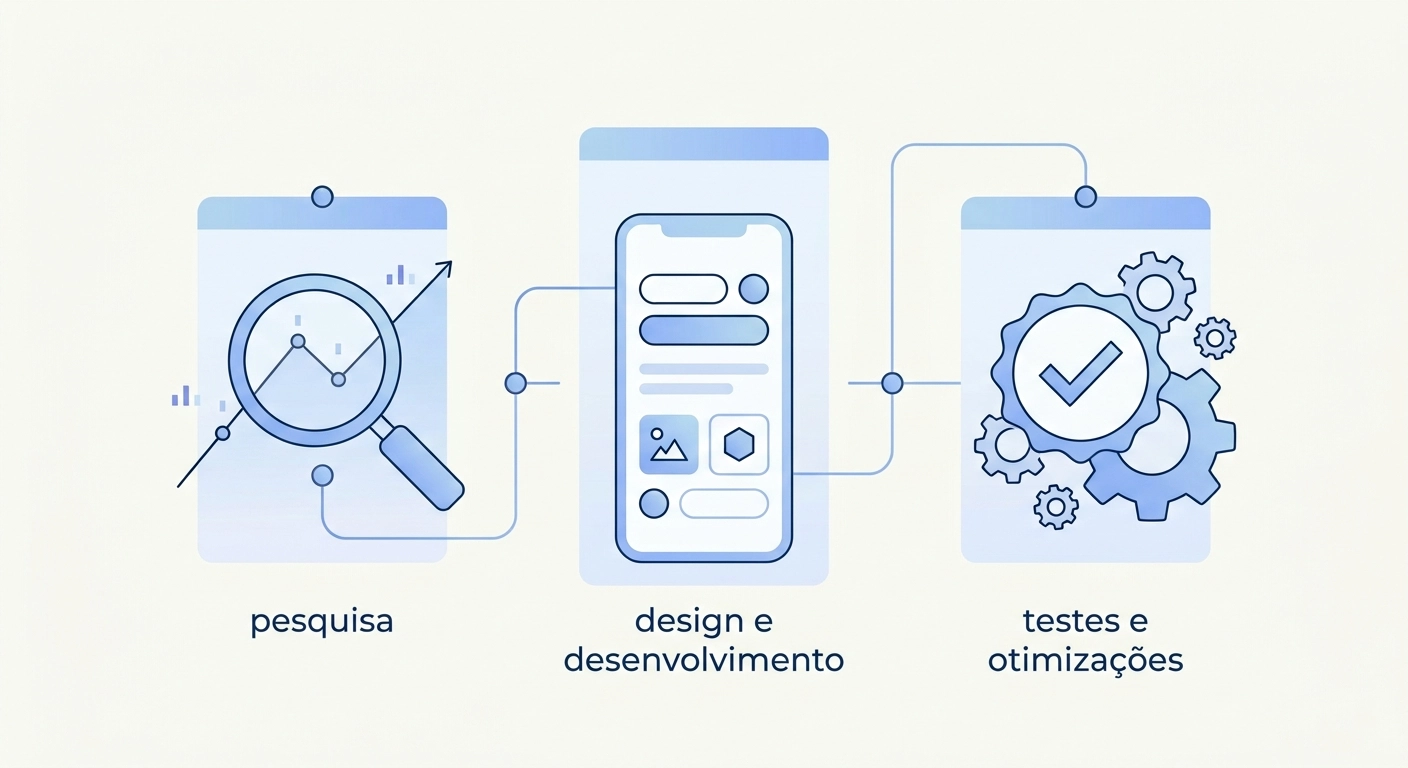
Creating a successful app in today’s digital landscape requires a strategic and comprehensive approach, supported by three fundamental pillars: market research and strategic planning, high-quality development and design, and testing with continuous optimization. In this article, we bring these elements together in a practical guide to creating an app that meets users’ real needs and stands out in a highly competitive market.
Market research and strategic planning
Before starting development, it’s essential to carry out detailed market research. This stage involves analyzing the competition, identifying the target audience’s needs, and understanding industry trends. It’s this process, close to what we call discovery, that provides the insights needed to guide the project’s direction with confidence, instead of starting from internal assumptions.
Strategic planning complements this phase. It’s the moment to define the app’s objectives, choose the most suitable business model, establish short- and long-term goals, and structure a consistent marketing strategy. Having clarity on these points from the start reduces rework in the following stages and significantly increases the project’s chances of success.
High-quality development and design
With the planning defined, the project moves on to the development and design phase. Code quality is decisive in ensuring the app runs stably and offers a good user experience. Design, in turn, plays a direct role in attracting and retaining those users.
Counting on an experienced development team ensures the technical foundation needed to sustain the project over time. The interface must be friendly and responsive across different devices, with an attractive, intuitive design that provides a solid usage experience — a factor that directly impacts how users perceive the product as a whole.
Testing and continuous optimization
Completing development doesn’t end the work. The testing phase is essential to identify and fix problems before they reach the end user. Rigorous testing, covering different usage scenarios, is what ensures a reliable app in day-to-day use.
Moreover, continuous optimization is what keeps the app relevant and competitive after launch. That means being open to user feedback, closely tracking performance metrics, and implementing improvements on an ongoing basis, instead of treating the launch as a finish line.
Final considerations
A successful app depends on solid market research, well-defined strategic planning, quality development and design, as well as testing and continuous optimization. By following these three pillars, a project has a much more consistent foundation to win users and stand out in an increasingly competitive digital market. It’s worth remembering that an app’s journey doesn’t end at launch: constant adaptation to market changes and user feedback is what sustains its success over time.
Ready to turn your idea into an efficient digital solution?
Get in touch and request a personalized quote for your project.
Contact us