Your digital product doesn't stop demanding attention when it goes live
System maintenance keeps silent failures from turning into crises: understand the real risks of leaving a website or app without ongoing care.
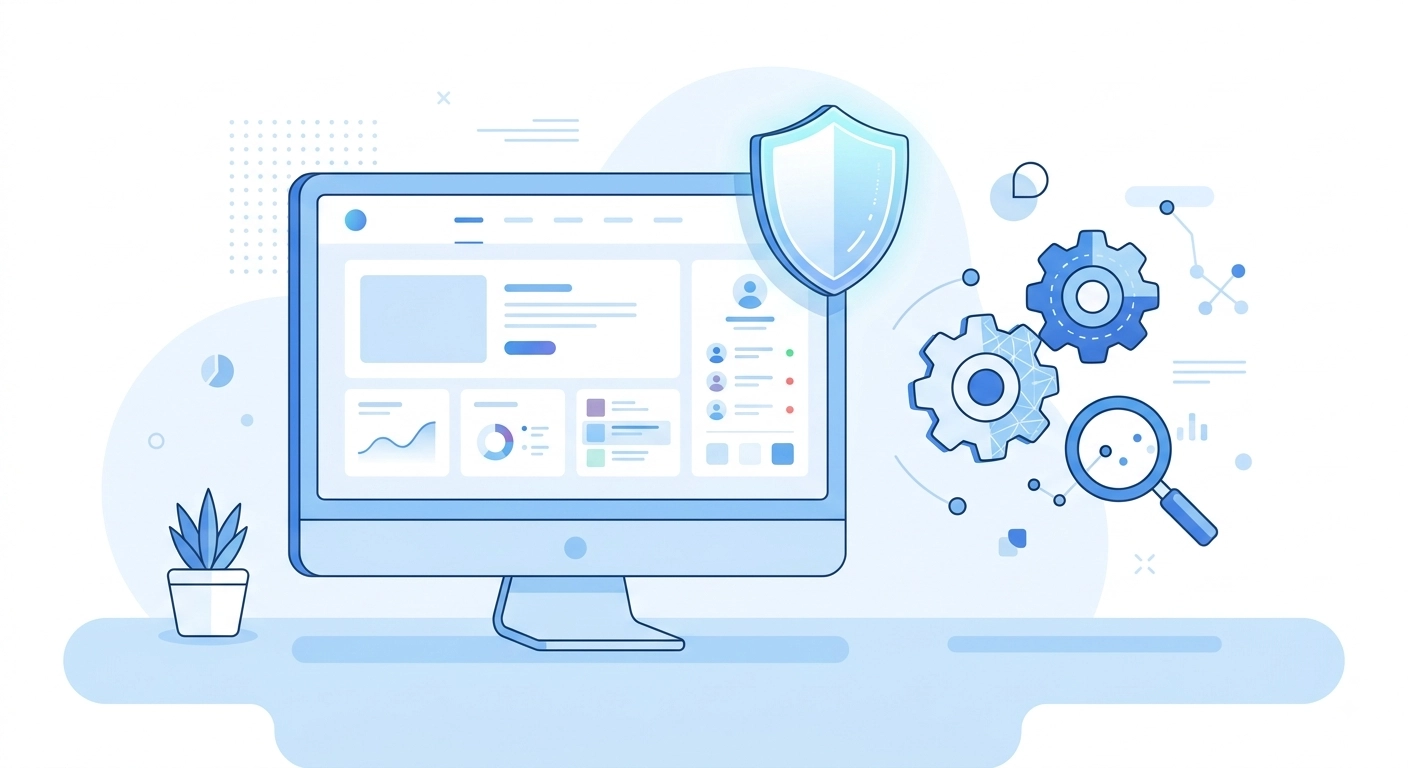
Every company that invests in a website, app, or internal system goes through a similar moment: the project goes live, the team celebrates the delivery and, from then on, attention shifts to other priorities. The product works, users access it without problems, and it feels like the work is done. That perception is understandable, but mistaken. A digital system is not a building that ends when construction wraps up; it’s closer to a living structure, one that depends on its surroundings to keep working as it should. And those surroundings change all the time, even when no one touches a single line of code.
What really happens to a system after it goes live
Code that isn’t touched doesn’t stay static relative to the world around it. The libraries and frameworks used in the project receive security updates that, when not applied, leave known vulnerabilities open. Browsers change how they interpret certain web standards, mobile operating systems change permission policies, and third-party APIs — like payment gateways, email services, or ERP integrations — evolve their own versions and deprecate old endpoints without warning proportional to the impact they cause. None of that depends on a decision by the company that owns the product; the technical ecosystem is moving, and a system standing still in that scenario is, in practice, getting more fragile every month, even with no visible change on the user’s screen.
This process is silent because most failures don’t show up right away. A security vulnerability can exist for months before being exploited. An integration can keep working until the day an external partner deactivates the old API version without alerting all its clients. When the problem finally appears, it usually appears in production, in front of the user, at the worst possible moment.
The invisible cost of having no maintenance
The absence of maintenance doesn’t produce a constant, visible cost; it produces accumulated risk that shows up in concentrated and expensive moments. A common example: an e-commerce store whose payment gateway integration stops working right in the middle of a sales peak, because the provider discontinued an API version months earlier and no one had updated the implementation. The loss in that scenario isn’t just the development time to fix the problem; it’s the revenue lost during the outage, the friction with customers who tried to buy and couldn’t, and the internal team’s time redirected to putting out a fire that could have been avoided with a routine update.
This pattern repeats across different contexts: an internal management system that starts slowing down as the database grows without anyone optimizing queries; an app that disappears from the stores for failing to comply with a new privacy policy; an institutional website compromised by a vulnerability in an outdated plugin, damaging not just the page but the brand’s reputation. In every case, the cost of fixing the problem after it has already happened is significantly higher than the cost of preventing it — in money, time, and customer trust alike.
Common mistakes when deciding about maintenance
Some decisions, made with good intentions, end up exposing the business to unnecessary risk:
- Treating maintenance as an optional budget item, cut whenever costs need to be reduced, without considering that the risk removed from the budget still exists technically, just without coverage.
- Confusing reactive support (fixing what has already broken) with continuous maintenance (monitoring, updating, and preventing before something breaks), hiring only the former and assuming that fully solves the problem.
- Leaving maintenance to the same team that built the project without formalizing a contract or a clear routine, which usually results in sporadic updates made with no priority and no oversight.
- Not monitoring the system proactively, relying on user complaints to discover that something is down or behaving incorrectly.
- Ignoring that a system validated as an MVP, even well planned during the discovery process, still requires maintenance as soon as it goes into production; the discovery phase reduces construction risk, not operational risk.
What a maintenance service should actually cover
Well-structured maintenance goes beyond fixing bugs when someone reports a problem. It includes continuous monitoring of availability and performance, to spot degradation before the user notices it; periodic updates of dependencies and frameworks, applying security patches as they’re released; regularly tested backups, not just configured once and forgotten; and tracking external integrations, to react to changes in third-party APIs before they break something in production. In many cases, it also involves small incremental UX or performance improvements, leveraging accumulated knowledge of how users actually use the product day to day.
A maintenance service with that scope works like operational insurance: the monthly cost is predictable and relatively low compared with the cost of a serious untreated failure. It’s also a way to keep the system evolving consistently, instead of accumulating technical debt until a full rewrite becomes the only viable option — a scenario far more expensive than any maintenance contract.
How to decide whether your company needs this now
If the system in question generates direct revenue, handles customer data, or is the company’s main gateway to new business, continuous maintenance stops being a luxury and becomes part of the business infrastructure, on the same level as physical security or building insurance. The relevant question isn’t whether something will break, but when — and whether the company will find out before or after the customer does.
Caring for a website, app, or system after launch is what ensures the investment made in building it keeps generating returns over time, instead of silently deteriorating until it demands an expensive emergency fix.
If your company still treats maintenance as something to think about after a problem appears, consider a free consultation with our team. UON.dev can assess the current state of your project and propose a maintenance routine suited to the size and criticality of what you operate.
Ready to turn your idea into an efficient digital solution?
Get in touch and request a personalized quote for your project.
Contact us